Top Quality Pharma Pet Bottle Manufacturers for Vaccine Storage
Securing the stability of liquid vaccines and veterinary medications requires packaging that balances chemical inertness with physical resilience. In high-stakes medical and laboratory environments, the transition from glass to high-grade polymers has addressed critical safety concerns regarding breakage and contamination. Choosing a reliable source among pharma pet bottle manufacturers involves evaluating not just the material, but the precision of the manufacturing process, such as injection blowing, which ensures uniform wall thickness and structural integrity.
Whether for large-scale livestock vaccination programs or precise laboratory research, the choice of container directly impacts the potency of the medicine. Specialized containers, such as white opaque vials, provide essential UV protection for light-sensitive reagents while maintaining a lightweight profile for field portability. This guide examines the technical requirements of pharmaceutical plastic packaging and the manufacturing standards necessary to maintain sterile, high-performance storage solutions for animal healthcare.

Advanced Injection Blowing Technology for Pharmaceutical Vaccine Containers
The production of high-quality vaccine bottles relies heavily on the injection blowing process. Unlike standard extrusion, this method allows for superior control over the bottle's geometry, resulting in a beautiful, generous appearance and a neat, uniform body. For pharmaceutical applications, this consistency is not merely aesthetic; it ensures that the internal volume is precise and that the structural strength is distributed evenly across the container, reducing the risk of failure during transport or pressurized handling.
From a technical perspective, the use of medical-grade plastics like polyethylene (PE) and polypropylene (PP) ensures that the containers possess a low expansion coefficient. This is critical when medicines are subjected to temperature fluctuations during refrigeration or field administration. The compatibility between the plastic material and liquid medicine is paramount, as any leaching or chemical reaction could compromise the vaccine's efficacy. These materials provide excellent resistance to acids, alkalis, and heat, making them suitable for a wide array of complex veterinary formulations.
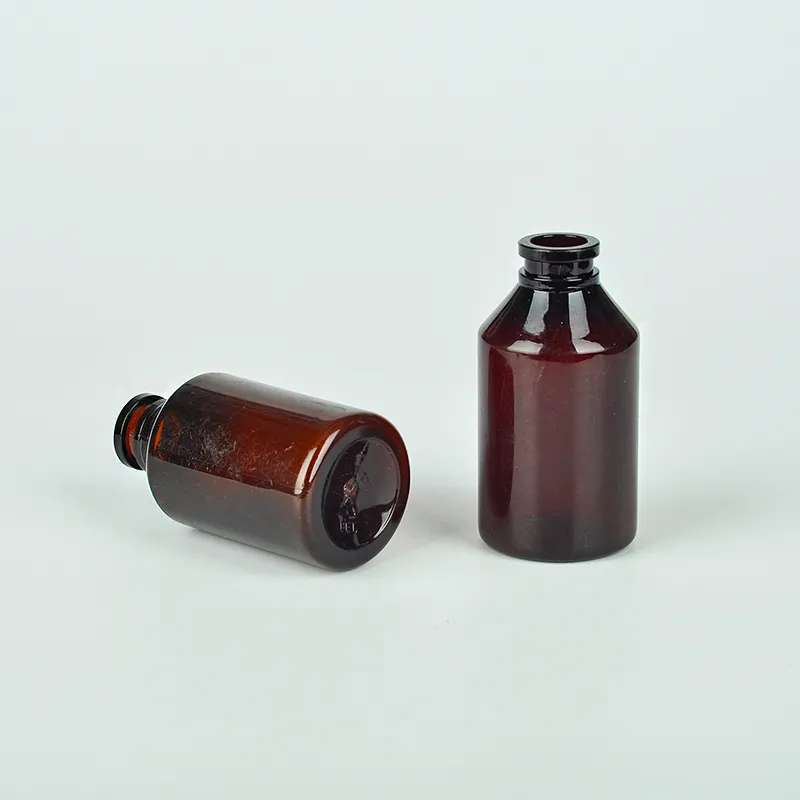
Furthermore, the ability to produce bottles in various transparencies—ranging from colorless and transparent for easy inspection to brown and opaque for light protection—allows manufacturers to tailor the packaging to the specific chemical vulnerabilities of the drug. By prioritizing injection blowing skills, the resulting containers eliminate the need for extensive secondary cleaning or drying before use, streamlining the pharmaceutical supply chain.

The Role of Opaque White Plastic Vials in Veterinary Medicine
In veterinary clinics and livestock facilities, the environment is often unpredictable. White plastic veterinary medicine vaccine vials are engineered to meet these demands by offering a combination of durability and specialized protection. The most significant advantage of the white coloration is its opacity. Many veterinary vaccines contain light-sensitive compounds that degrade rapidly upon exposure to UV radiation. The white surface acts as a shield, preserving the integrity and potency of the formulation throughout its shelf life.
Beyond UV protection, these vials offer substantial safety advantages over traditional glass. In a farm or clinic setting, the risk of accidental breakage is high; plastic vials are shatter-proof, eliminating the danger of glass shards contaminating the workspace or injuring staff and animals. The lightweight nature of PE and PP plastics also makes these vials ideal for mobile veterinary clinics and large-scale field vaccinations where portability is essential for operational efficiency.
Operational utility is further enhanced through ergonomic design. Many of these vials are equipped with secure screw caps that prevent leakage and maintain sterility, minimizing the risk of accidental spills. Some advanced designs even incorporate features for organized storage in laboratory racks, ensuring that practitioners can quickly identify and access the correct dosages, thereby reducing medical errors in high-volume environments.
Critical Evaluation Criteria for Pharmaceutical Packaging Procurement
When sourcing pharmaceutical packaging, procurement managers must look beyond the unit price and focus on the Total Cost of Quality (TCQ). The primary concern is the stability of the container's material. A high-quality vial must be chemically inert to prevent interactions with the drug. Buyers should verify that the manufacturer adheres to Good Manufacturing Practices (GMP) and possesses recognized certifications, such as ISO 9001 and FDA approval, which serve as proxies for consistent quality control.
Another key consideration is the cleanliness of the production environment. For pharmaceutical containers, the use of clean rooms (such as 100,000-grade environments) is non-negotiable. This ensures that the bottles are free from particulate matter and microbial contamination from the moment of molding. Containers that can be used directly for packaging without secondary sterilization processes provide significant time and cost savings for the pharmaceutical company.
Finally, the versatility of the supplier's production lines is a strategic advantage. The ability to scale from small-volume laboratory vials to large-volume livestock containers ensures a streamlined supply chain. Buyers should evaluate the manufacturer's capacity for customization, including specific neck finishes for different closure systems and the ability to provide various colors (clear, brown, white) to meet diverse drug stability requirements.
Technical Comparison of Pharmaceutical Plastic Materials
| Material Type | Chemical Resistance | UV Protection | Primary Application |
|---|---|---|---|
| Transparent PP | High | Low | General Liquid Medicine |
| Opaque White PE | High | High | Light-Sensitive Vaccines |
| Amber/Brown PET | Medium-High | Medium-High | Photosensitive Reagents |
| Medical Grade HDPE | Very High | Medium | Corrosive Veterinary Drugs |
| Injection Blown PP | High | Variable | High-Precision Vials |
Ensuring Sterile Integrity and Compliance in Plastic Molding
The intersection of material science and sterile engineering is where pharmaceutical packaging succeeds or fails. To ensure that a plastic bottle does not introduce contaminants, manufacturers must implement rigorous quality assurance protocols. This includes the use of fully automatic production lines that minimize human contact and the maintenance of strict environmental controls within the facility. The integration of 100,000-grade clean rooms ensures that the air quality meets the stringent requirements for drug packing materials.
Compliance is evidenced through registration certificates for drug packing materials. These certifications prove that the materials used have been tested for biocompatibility and do not leach harmful substances into the medication. For global exporters, FDA certification and ISO 9001 standards are critical benchmarks that ensure the products meet international safety and quality expectations, facilitating easier entry into regulated markets.
Quality assurance also extends to the physical testing of every batch. This includes leak tests, stress-crack resistance tests, and dimensional verification. By employing a dedicated QA team to oversee the adherence to Good Manufacturing Practices, manufacturers can guarantee that every vial—regardless of the production volume—maintains the same level of integrity, protecting both the manufacturer's reputation and the end-user's safety.
Future Trends in Sustainable Veterinary Pharmaceutical Packaging
The pharmaceutical packaging industry is currently shifting toward a balance between extreme sterility and environmental sustainability. There is an increasing demand for recyclable medical-grade plastics that do not compromise the barrier properties required for vaccine stability. The development of high-performance polymers that can be processed with less energy while maintaining a low expansion coefficient is a key area of innovation.
Additionally, we are seeing a trend toward "smart packaging," where containers are designed for better integration with automated dispensing systems in large-scale livestock operations. This includes optimized bottle shapes that reduce waste during filling and closures that are easier to operate with gloves in field conditions. The goal is to reduce the overall waste generated in the veterinary supply chain without risking the stability of the liquid medicine.
As global health standards for animal care continue to rise, the role of the manufacturer evolves from a simple supplier to a technical partner. Future advancements will likely focus on enhancing the opaque properties of plastics to provide even greater UV protection without increasing the wall thickness, thereby reducing the amount of plastic used per unit while increasing the safety of the medicine.
Frequently Asked Questions Regarding Pharma Plastic Packaging
Why is injection blowing preferred over extrusion for vaccine bottles?
Injection blowing provides superior precision in wall thickness and bottle geometry. This results in a more uniform container that is structurally stronger and aesthetically cleaner, which is critical for meeting pharmaceutical standards and ensuring accurate filling volumes.
How do white plastic vials protect light-sensitive vaccines?
The opaque white surface of the plastic blocks UV radiation and other short-wavelength light from penetrating the bottle. This prevents the photodegradation of sensitive chemical compounds in the vaccine, maintaining its potency during storage and transport.
Are plastic vaccine vials safe for long-term refrigeration?
Yes, provided they are made from medical-grade polymers like PP or PE. These materials have a low expansion coefficient and high temperature stability, meaning they won't crack or leach chemicals when stored at the low temperatures required for vaccine stability.
What certifications should I look for in a pharmaceutical bottle supplier?
You should verify ISO 9001 for quality management, FDA certification for material safety, and specific drug packing material registrations. Additionally, ensure the manufacturer utilizes certified clean rooms (e.g., 100,000-grade) for production.
Can these plastic vials be used without additional cleaning?
When produced in a certified clean room environment using fully automatic lines, these bottles are manufactured to a high level of purity, allowing them to be used for vaccine packaging without the need for secondary cleaning or drying.
What is the main advantage of plastic vials over glass in veterinary use?
The primary advantages are durability and safety. Plastic vials are shatter-proof, which is essential in livestock and clinic settings to prevent injuries and contamination, and they are significantly lighter, making them easier to transport in the field.
Technical References and Industry Standards
- World Health Organization - Vaccine Storage and Handling Guidelines
- U.S. Food and Drug Administration - Medical Device and Packaging Standards
- International Organization for Standardization - ISO 9001 Quality Management
- PubMed - Studies on Polymer Compatibility with Pharmaceutical Liquids
Selecting the right pharmaceutical container is a critical decision that impacts drug safety and operational efficiency. By partnering with an experienced manufacturer that combines advanced injection blowing technology with strict clean-room standards, you ensure that your liquid medications remain stable and effective from the factory to the animal.
Related Pharmaceutical Packaging Solutions