



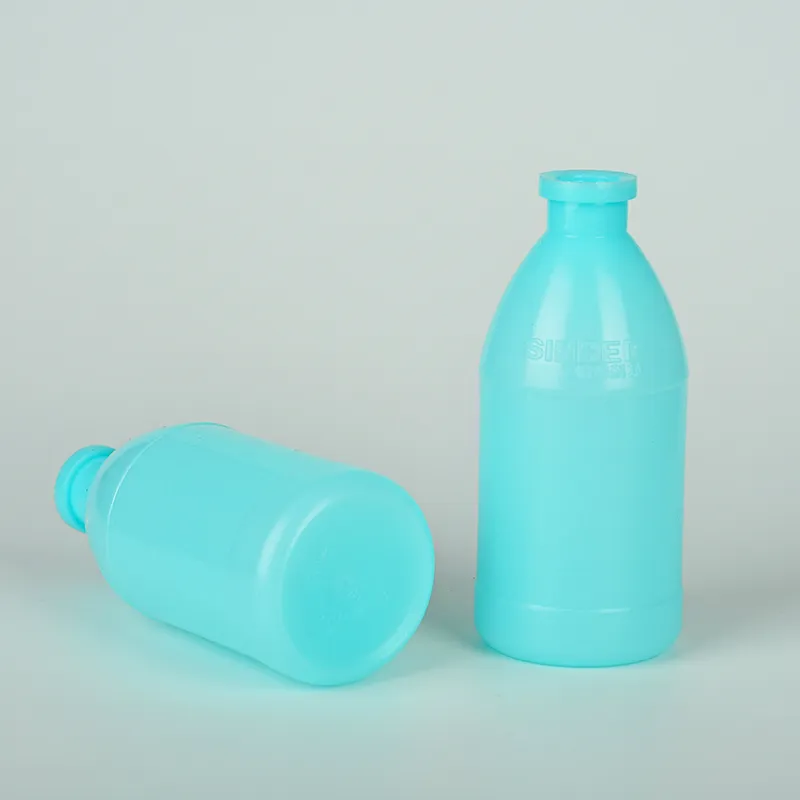
Frasco de líquido de medicina veterinaria de laboratorio de frasco de vacuna de plástico azul de 250 ml
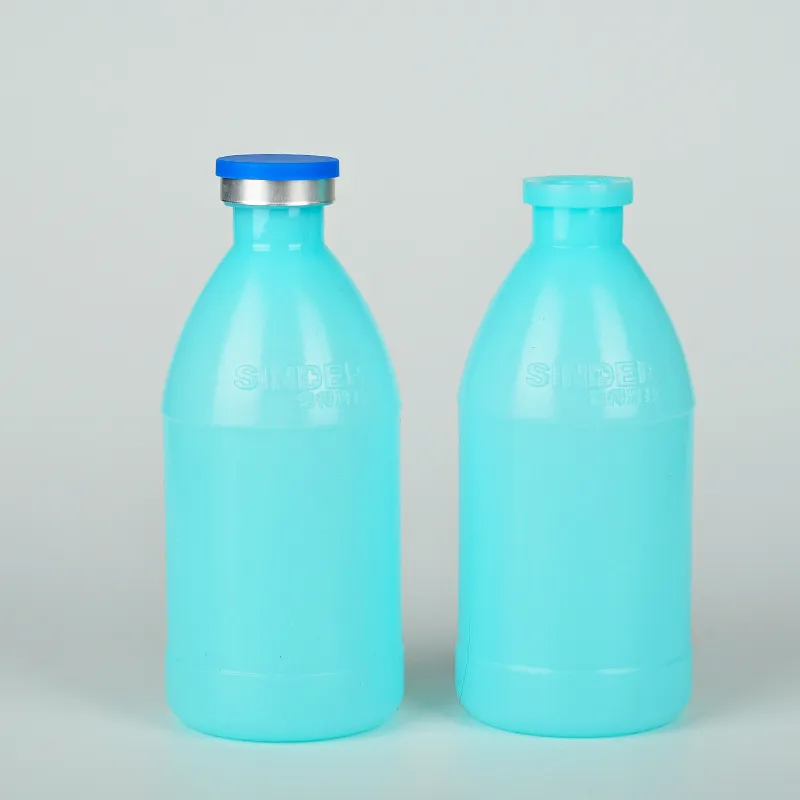
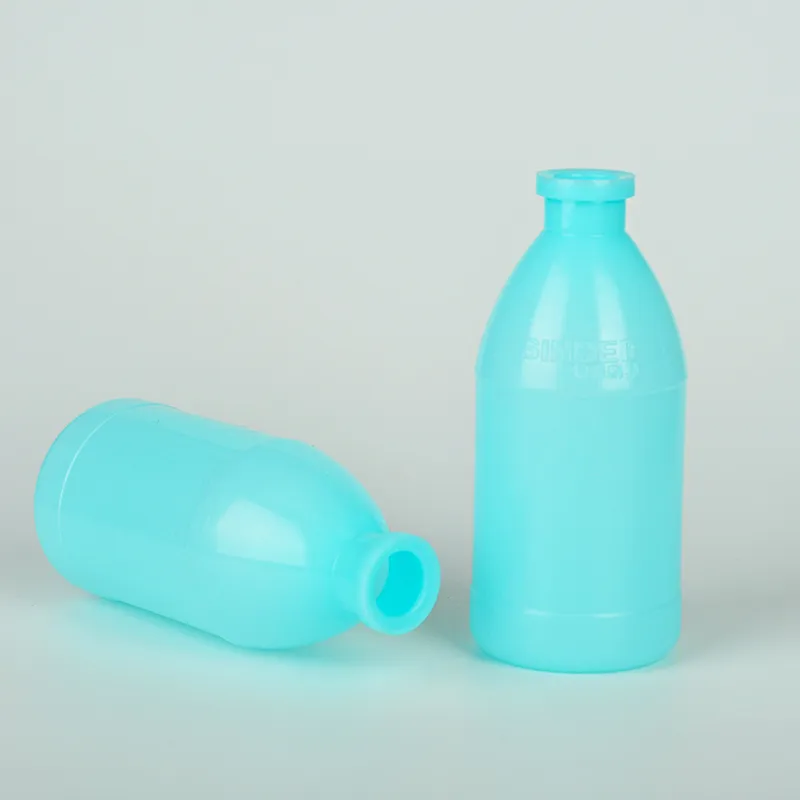
Las botellas de envases de plástico tienen las ventajas de ser livianas, irrompibles y de alto costo, y se usan ampliamente en diversas industrias, como el envasado de productos farmacéuticos, las necesidades diarias y los alimentos. En términos de métodos de procesamiento, el moldeo por extrusión-soplado y el soplado por inyección son los principales. El proceso de soplado por inyección, es decir, el soplado por inyección, es un método de moldeo por soplado que combina el moldeo por inyección y el moldeo por soplado. Primero, el molde con fondo se produce mediante moldeo por inyección y luego el molde se transfiere al molde de soplado para moldeo por soplado. El moldeo por inyección y soplado primero es el embrión de producción. El agente de inyección inyectará la masa fundida en el molde de inyección con un tubo central de soplado para formar el molde con fondo y luego lo transferirá al molde de soplado en la estación de moldeo por soplado a través del dispositivo mecánico de soplado. Después de inflar el molde, se cierra el molde, se introduce aire comprimido en el molde a través de los poros del mandril y el molde se ajusta estrechamente a la cavidad de moldeo por soplado bajo la acción de la presión del aire y se transfiere a la estación de liberación después del enfriamiento; Finalmente, el producto se retira del mandril en la estación de liberación o se envía directamente al puesto de embalaje y luego al siguiente ciclo de producción.
La botella de embalaje de plástico producida mediante este proceso no forma una junta en la superficie, no necesita recortarse después de la formación, generalmente no produce materiales sobrantes en las esquinas, el espesor de la pared del producto terminado es uniforme, de alta precisión y es adecuado para procesamiento de botellas de plástico de pequeña capacidad.
Con el progreso continuo de la ciencia y la tecnología, la tecnología de procesamiento de botellas de embalaje de plástico también mejora constantemente, como el proceso de inyección y soplado de dos pasos que ha sido reemplazado gradualmente por el proceso más avanzado de inyección y soplado de un solo paso, y la calidad de las botellas de plástico también tendrá un salto cualitativo.
Applications of 250ml Blue Plastic Vaccine Vial Laboratory Veterinary Medicine Liquid Vial in Veterinary and Laboratory Settings
The Frasco de líquido de medicina veterinaria de laboratorio de frasco de vacuna de plástico azul de 250 ml is a versatile and essential container widely used in veterinary clinics, laboratories, farms, and research facilities. Designed to safely store and transport vaccines, serums, and other liquid medicines, these vials ensure the integrity, sterility, and effectiveness of the contents while supporting efficient workflow in animal healthcare and laboratory settings.
One of the primary applications of this vial is in vaccine storage and administration. The 250ml capacity is ideal for medium to large-scale vaccination programs, allowing multiple doses to be stored in a single vial. The blue plastic construction protects light-sensitive vaccines and liquids from UV exposure, preventing degradation and maintaining potency. Veterinarians and laboratory technicians can quickly access the contents for accurate dosing, reducing waste and ensuring that each animal receives the correct amount of medicine.
These vials are also widely used in laboratory animal research. Researchers require reliable containers to store reagents, vaccines, and experimental liquids under sterile conditions. The 250ml Blue Plastic Vaccine Vial provides chemical stability and sterility, ensuring that liquids do not react with the container material or become contaminated. Screw caps and tamper-evident lids maintain the seal, making them suitable for repeated handling and minimizing the risk of spills or contamination during experiments.
In farm and livestock applications, these vials are invaluable for administering vaccines to large herds efficiently. Their lightweight, durable plastic construction makes them easy to carry and handle during field operations. The vials are compatible with syringes and automated dispensing systems, streamlining vaccination campaigns while maintaining hygiene and accuracy. This improves both productivity and animal health outcomes.
The vials are also ideal for mobile veterinary units and emergency vaccination campaigns. In remote or field conditions, maintaining vaccine integrity can be challenging due to temperature variations and handling requirements. The blue plastic vial’s durability, lightweight nature, and protective tint ensure that vaccines remain effective during transport and storage.
Additionally, the labeling surface and ergonomic design allow clear identification of contents, batch numbers, and expiration dates. This reduces the risk of errors, improves traceability, and facilitates organized storage in refrigeration units or laboratory racks. Overall, the 250ml Blue Plastic Vaccine Vial serves multiple practical functions, from storage and transport to administration and inventory management.
In conclusion, the Frasco de líquido de medicina veterinaria de laboratorio de frasco de vacuna de plástico azul de 250 ml has diverse applications in veterinary and laboratory settings, including vaccine storage, laboratory research, livestock vaccination, and field operations. Its durability, protective design, and versatile functionality make it an indispensable tool for ensuring safe, efficient, and effective animal healthcare practices.
Why 250ml Blue Plastic Vaccine Vial Laboratory Veterinary Medicine Liquid Vial Is Ideal for Safe Medicine Storage
The Frasco de líquido de medicina veterinaria de laboratorio de frasco de vacuna de plástico azul de 250 ml is designed to provide maximum safety and reliability for storing veterinary vaccines and other liquid medicines. Safe storage is critical in animal healthcare, as improper handling or environmental exposure can compromise vaccine potency, reduce effectiveness, or cause contamination.
One of the key reasons this vial is ideal for safe storage is its durable plastic construction. Made from medical-grade polypropylene (PP) or polyethylene (PE), the vial is lightweight, shatter-resistant, and chemically stable. Unlike glass vials, which can break during handling or transport, the plastic vial ensures that the contents remain intact and uncontaminated. This reduces the risk of product loss and protects veterinary staff from injuries caused by broken containers.
The blue tint is another crucial safety feature. Many vaccines and liquid medicines are sensitive to UV and visible light, which can degrade their chemical structure over time. The translucent blue plastic shields the contents from harmful light exposure while still allowing visibility to monitor liquid levels. This ensures that the stored vaccines maintain their potency until administration.
Secure screw caps or tamper-evident lids add another layer of protection. These closures prevent leaks, spills, and accidental contamination while maintaining sterility. Tamper-evident designs allow veterinarians and laboratory staff to confirm that the vial has not been compromised, supporting both safety and traceability. The airtight seal also allows for safe storage under refrigeration, further preserving the effectiveness of vaccines and liquid medicines.
The ergonomic design and labeling capability enhance safe storage practices. Smooth surfaces allow clear labeling of batch numbers, expiration dates, and dosage instructions, preventing mix-ups and ensuring proper inventory management. The 250ml size provides sufficient capacity for multiple doses, reducing the need for frequent handling and minimizing exposure to contamination risks.
In summary, the Frasco de líquido de medicina veterinaria de laboratorio de frasco de vacuna de plástico azul de 250 ml is ideal for safe medicine storage due to its durable plastic construction, UV-protective blue tint, secure closures, and ergonomic design. These features ensure that veterinary vaccines and liquid medicines remain stable, sterile, and effective, supporting safe and reliable animal healthcare practices.