



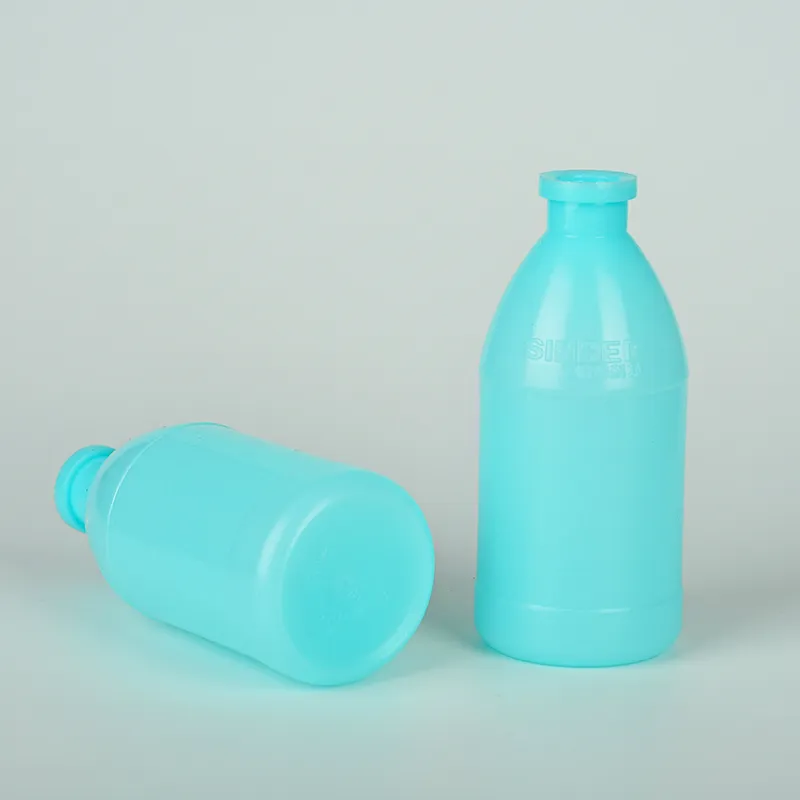
250ml Blau Kunststoff Impfstoff Fläschchen Labor Veterinär Medizin Flüssigkeit Fläschchen
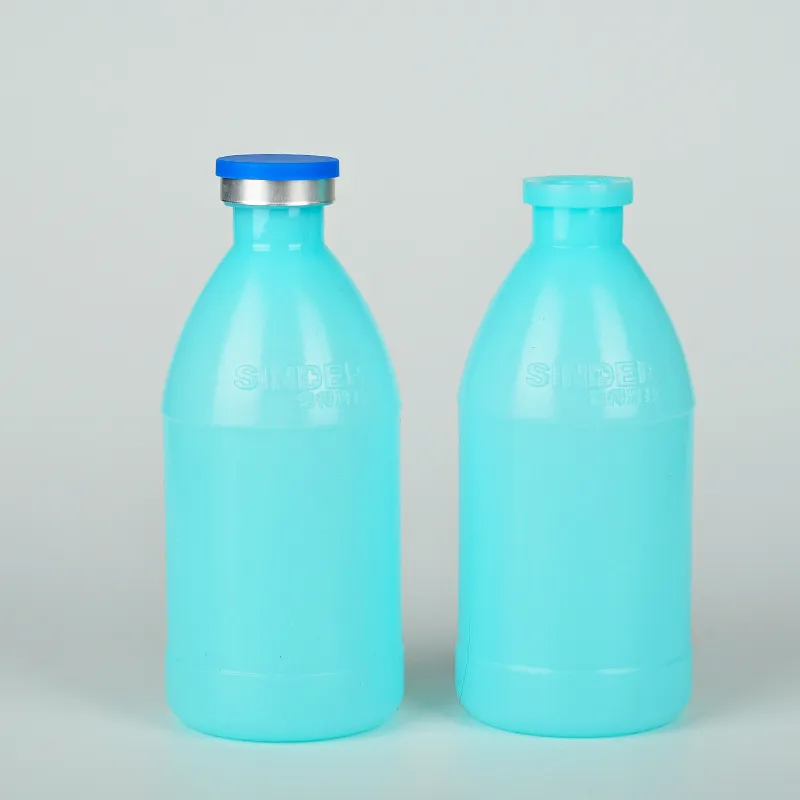
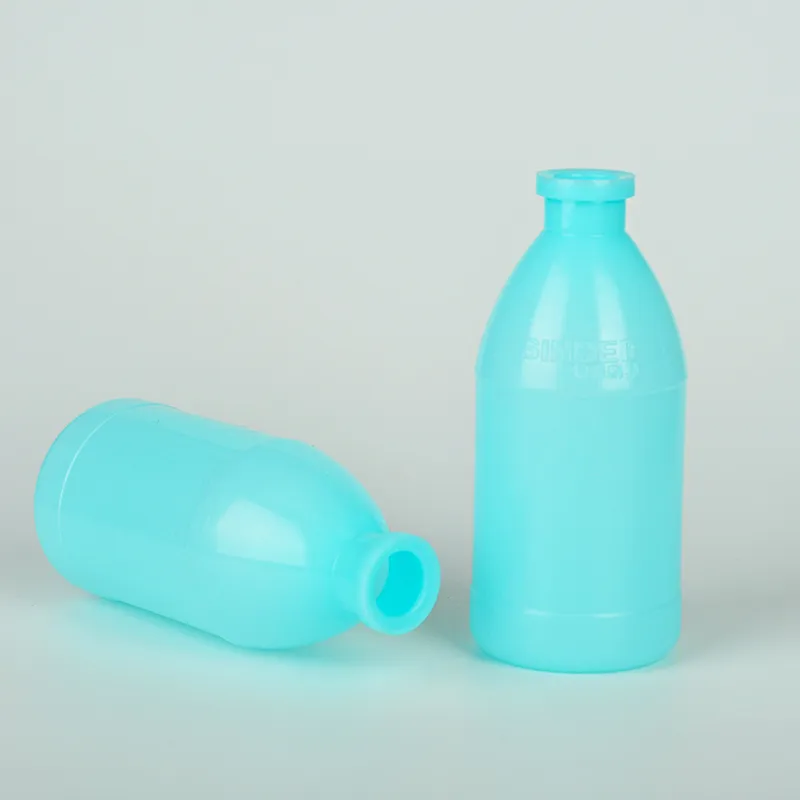
Plastikverpackungsflaschen sind leicht, unzerbrechlich und kostengünstig und werden in zahlreichen Branchen häufig verwendet, beispielsweise für die Verpackung pharmazeutischer Produkte, Artikel des täglichen Bedarfs und Lebensmittel. Bei den Verarbeitungsverfahren sind Extrusionsblasformen und Spritzblasen die wichtigsten. Das Spritzblasverfahren, also das Spritzblasen, ist ein Blasformverfahren, das Spritzgießen und Blasformen kombiniert. Zuerst wird durch Spritzgießen eine Form mit Boden hergestellt, und dann wird die Form zum Blasformen in die Blasform überführt. Beim Spritzblasformen handelt es sich zunächst um die Produktionsembryo. Das Injektionsmittel spritzt die Schmelze mit einem Blaskernrohr in die Spritzform, um eine Form mit Boden zu bilden, und überführt sie dann über eine mechanische Vorrichtung zum Blasformen in die Blasform an der Blasformstation. Nach dem Aufblasen der Form wird diese geschlossen, Druckluft wird durch die Dornporen in die Form eingeleitet, und die Form wird unter Einwirkung von Luftdruck eng an die Blasformhöhle angepasst und nach dem Abkühlen zur Entformungsstation überführt. Abschließend wird das Produkt an der Entnahmestation vom Dorn entfernt oder direkt zur Verpackungsstation und dann in den nächsten Produktionszyklus geschickt.
Die mit diesem Verfahren hergestellten Kunststoffverpackungsflaschen weisen keine Fugen auf der Oberfläche auf und müssen nach der Formgebung nicht zugeschnitten werden. An den Ecken bleiben im Allgemeinen keine Materialreste zurück. Die Wandstärke des fertigen Produkts ist gleichmäßig und hochgenau, sodass es für die Verarbeitung von Kunststoffflaschen mit kleinem Fassungsvermögen geeignet ist.
Mit dem kontinuierlichen Fortschritt von Wissenschaft und Technologie verbessert sich auch die Verarbeitungstechnologie von Kunststoffverpackungsflaschen ständig. Beispielsweise wurde das zweistufige Spritz- und Ziehblasverfahren schrittweise durch das fortschrittlichere einstufige Spritz- und Ziehblasverfahren ersetzt, und auch die Qualität der Kunststoffflaschen wird einen qualitativen Sprung machen.
Applications of 250ml Blue Plastic Vaccine Vial Laboratory Veterinary Medicine Liquid Vial in Veterinary and Laboratory Settings
The 250ml Blau Kunststoff Impfstoff Fläschchen Labor Veterinär Medizin Flüssigkeit Fläschchen is a versatile and essential container widely used in veterinary clinics, laboratories, farms, and research facilities. Designed to safely store and transport vaccines, serums, and other liquid medicines, these vials ensure the integrity, sterility, and effectiveness of the contents while supporting efficient workflow in animal healthcare and laboratory settings.
One of the primary applications of this vial is in vaccine storage and administration. The 250ml capacity is ideal for medium to large-scale vaccination programs, allowing multiple doses to be stored in a single vial. The blue plastic construction protects light-sensitive vaccines and liquids from UV exposure, preventing degradation and maintaining potency. Veterinarians and laboratory technicians can quickly access the contents for accurate dosing, reducing waste and ensuring that each animal receives the correct amount of medicine.
These vials are also widely used in laboratory animal research. Researchers require reliable containers to store reagents, vaccines, and experimental liquids under sterile conditions. The 250ml Blue Plastic Vaccine Vial provides chemical stability and sterility, ensuring that liquids do not react with the container material or become contaminated. Screw caps and tamper-evident lids maintain the seal, making them suitable for repeated handling and minimizing the risk of spills or contamination during experiments.
In farm and livestock applications, these vials are invaluable for administering vaccines to large herds efficiently. Their lightweight, durable plastic construction makes them easy to carry and handle during field operations. The vials are compatible with syringes and automated dispensing systems, streamlining vaccination campaigns while maintaining hygiene and accuracy. This improves both productivity and animal health outcomes.
The vials are also ideal for mobile veterinary units and emergency vaccination campaigns. In remote or field conditions, maintaining vaccine integrity can be challenging due to temperature variations and handling requirements. The blue plastic vial’s durability, lightweight nature, and protective tint ensure that vaccines remain effective during transport and storage.
Additionally, the labeling surface and ergonomic design allow clear identification of contents, batch numbers, and expiration dates. This reduces the risk of errors, improves traceability, and facilitates organized storage in refrigeration units or laboratory racks. Overall, the 250ml Blue Plastic Vaccine Vial serves multiple practical functions, from storage and transport to administration and inventory management.
In conclusion, the 250ml Blau Kunststoff Impfstoff Fläschchen Labor Veterinär Medizin Flüssigkeit Fläschchen has diverse applications in veterinary and laboratory settings, including vaccine storage, laboratory research, livestock vaccination, and field operations. Its durability, protective design, and versatile functionality make it an indispensable tool for ensuring safe, efficient, and effective animal healthcare practices.
Why 250ml Blue Plastic Vaccine Vial Laboratory Veterinary Medicine Liquid Vial Is Ideal for Safe Medicine Storage
The 250ml Blau Kunststoff Impfstoff Fläschchen Labor Veterinär Medizin Flüssigkeit Fläschchen is designed to provide maximum safety and reliability for storing veterinary vaccines and other liquid medicines. Safe storage is critical in animal healthcare, as improper handling or environmental exposure can compromise vaccine potency, reduce effectiveness, or cause contamination.
One of the key reasons this vial is ideal for safe storage is its durable plastic construction. Made from medical-grade polypropylene (PP) or polyethylene (PE), the vial is lightweight, shatter-resistant, and chemically stable. Unlike glass vials, which can break during handling or transport, the plastic vial ensures that the contents remain intact and uncontaminated. This reduces the risk of product loss and protects veterinary staff from injuries caused by broken containers.
The blue tint is another crucial safety feature. Many vaccines and liquid medicines are sensitive to UV and visible light, which can degrade their chemical structure over time. The translucent blue plastic shields the contents from harmful light exposure while still allowing visibility to monitor liquid levels. This ensures that the stored vaccines maintain their potency until administration.
Secure screw caps or tamper-evident lids add another layer of protection. These closures prevent leaks, spills, and accidental contamination while maintaining sterility. Tamper-evident designs allow veterinarians and laboratory staff to confirm that the vial has not been compromised, supporting both safety and traceability. The airtight seal also allows for safe storage under refrigeration, further preserving the effectiveness of vaccines and liquid medicines.
The ergonomic design and labeling capability enhance safe storage practices. Smooth surfaces allow clear labeling of batch numbers, expiration dates, and dosage instructions, preventing mix-ups and ensuring proper inventory management. The 250ml size provides sufficient capacity for multiple doses, reducing the need for frequent handling and minimizing exposure to contamination risks.
In summary, the 250ml Blau Kunststoff Impfstoff Fläschchen Labor Veterinär Medizin Flüssigkeit Fläschchen is ideal for safe medicine storage due to its durable plastic construction, UV-protective blue tint, secure closures, and ergonomic design. These features ensure that veterinary vaccines and liquid medicines remain stable, sterile, and effective, supporting safe and reliable animal healthcare practices.