To be honest, things have been crazy busy lately. Everyone's talking about miniaturization, you know? Everything needs to be smaller, lighter, more integrated. And plastic flip top vials are right in the thick of it. We’ve seen a huge jump in demand, especially with the bio-tech and pharmaceutical companies. Seems like everyone’s developing something new… and they all need something to put it in. But it's not just about shrinking things down. It’s about reliable shrinking. Have you noticed how many supposedly ‘high-precision’ vials crack under even moderate stress? It’s a nightmare.
I was at a factory in Zhejiang province last month, and they were showing off their new automated filling line. Looked impressive, all flashing lights and robotic arms. But when I asked about drop-test results… well, let's just say they quickly changed the subject. Too many companies focus on the output, not on whether the container can actually survive the real world. And the real world, let me tell you, is a messy place.
Anyway, I think the biggest challenge right now is balancing cost with performance. Everyone wants the cheapest option, but that often means sacrificing quality. And in this business, sacrificing quality can have serious consequences. Strangely enough, the biggest problems usually stem from the seemingly smallest details.
The Current Landscape of plastic flip top vials
The market’s absolutely flooded with different types of plastic flip top vials. You've got your standard polypropylene, polyethylene, even some exotic blends with PTFE for improved chemical resistance. It used to be that polypropylene was the go-to, because it’s cheap and fairly durable. But now, everyone’s looking for something with better clarity, better barrier properties… and, of course, better price.
What I’m seeing more and more is a demand for vials designed for automated systems. They need to be perfectly uniform in size and shape, with tight tolerances. Any variation, and the whole line grinds to a halt. I encountered this at a packaging plant in Guangdong last time, and we were losing production time by the hour until the vial dimensions were sorted out. It’s a pain.
Design Pitfalls and Common Mistakes
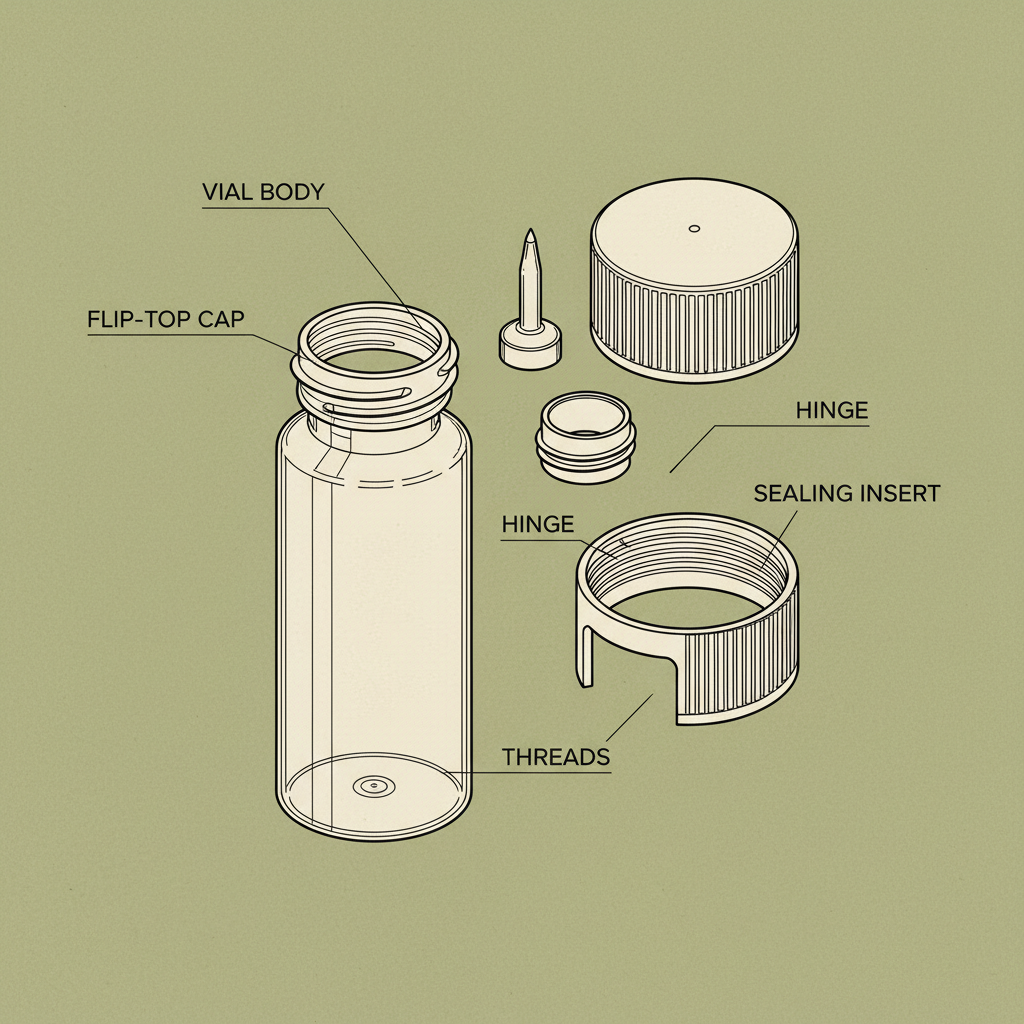
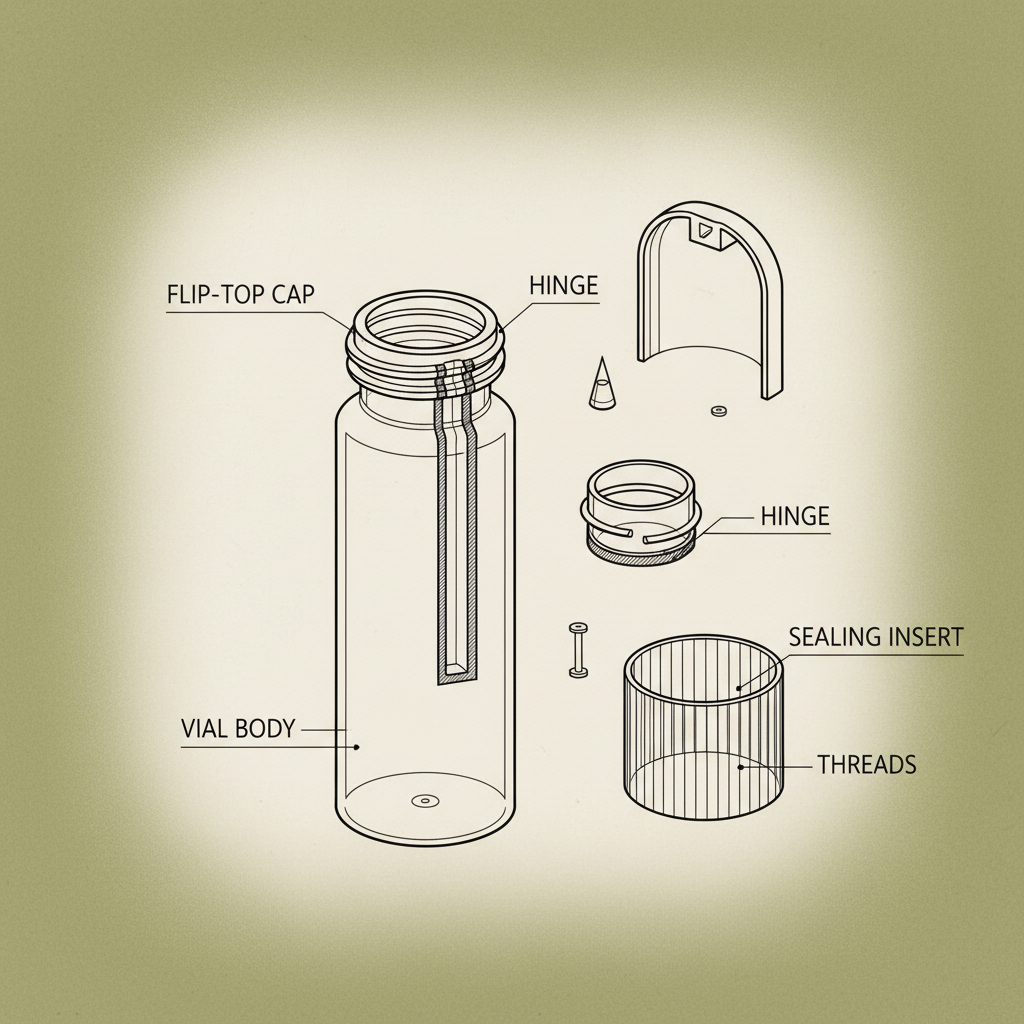
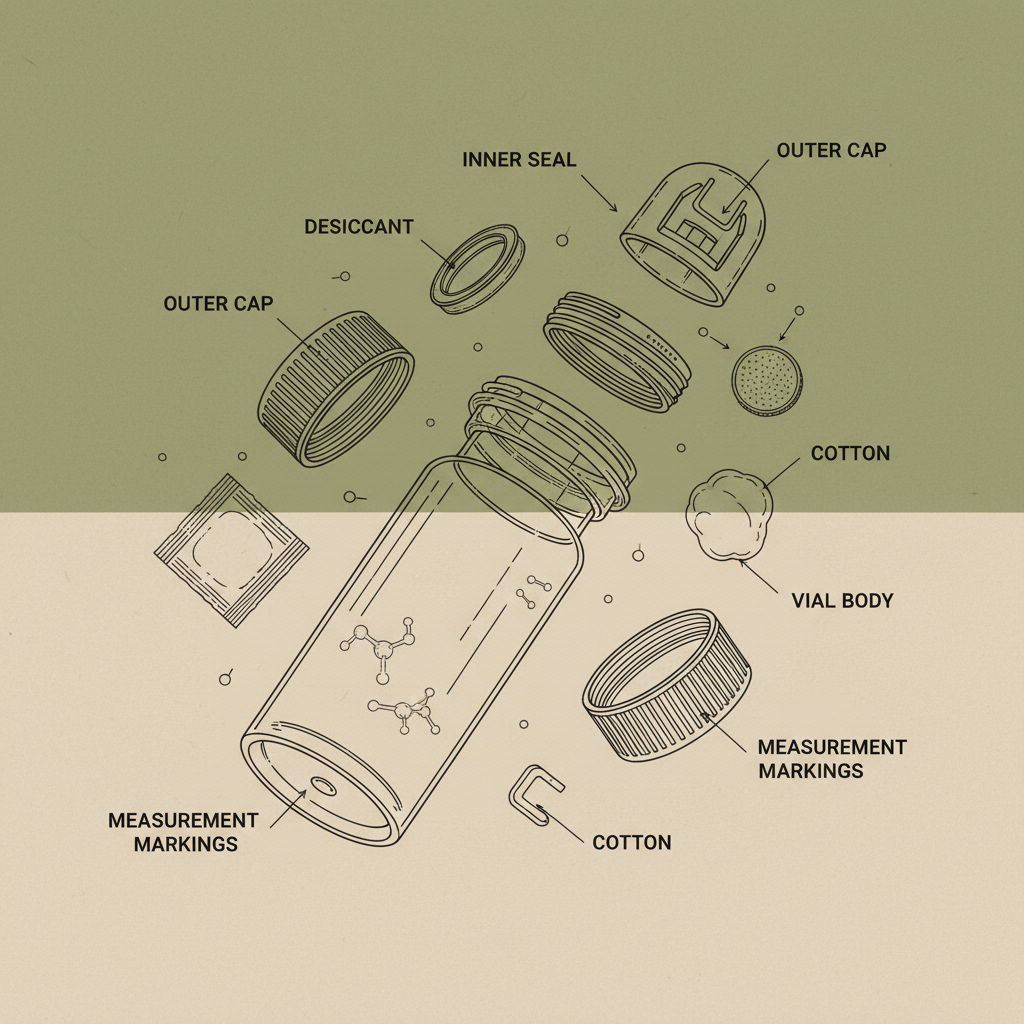
One of the biggest mistakes I see is underestimating the importance of the flip top mechanism itself. It seems simple enough, right? Just a hinged cap. But get the hinge angle wrong, or use the wrong type of plastic, and you’ve got a broken cap, a leaking vial, and a whole lot of unhappy customers. Also, those little ridges that create the snap-fit… if they’re not designed properly, they’ll wear out quickly and the cap won’t seal properly.
Another common error is neglecting the impact of temperature. A vial that works perfectly at room temperature might become brittle in cold weather, or warp in the heat. We had a customer who shipped a batch of vials to Siberia last winter, and they all shattered. Turns out, they hadn't factored in the extreme cold.
And don't even get me started on thread design. A poorly designed thread can strip easily, making it impossible to open or close the vial. It seems like a small detail, but it can cause a huge amount of frustration.
Material Science: Beyond the Spec Sheet
Look, you can read all the spec sheets you want, but they don’t tell you everything. Polypropylene feels different depending on the manufacturer. Some are stiff and brittle, others are more flexible and impact-resistant. And the smell… yeah, I know it sounds crazy, but you can often tell the quality of the plastic just by the smell. A strong chemical odor usually means they’ve used a lot of additives.
We've been experimenting with some bio-based plastics lately, like PLA and PHA. They’re more sustainable, which is a big plus, but they're also more expensive and have different properties. PLA, for example, is very brittle and sensitive to heat. PHA is more promising, but it’s still relatively new and not widely available. Anyway, I think sustainable materials are the future, but we need to find a way to make them cost-competitive.
There's also the question of additives. You've got your plasticizers, stabilizers, UV inhibitors… the list goes on. Each one affects the properties of the plastic in different ways. And some additives can leach out over time, contaminating the contents of the vial. That's a serious concern for pharmaceutical applications.
Real-World Testing and Performance
Forget the lab tests. Drop tests, tensile strength tests, all that stuff is useful, but it doesn’t tell you what will happen when a worker drops a case of vials on a concrete floor. We do our own testing, in real-world conditions. We pack vials into boxes, stack them high, drop them from different heights, and see what happens. It's not pretty, but it's effective.
We also send samples to our customers for testing in their own facilities. They can subject the vials to whatever stresses they encounter in their own processes. That’s the best way to get an accurate assessment of performance.
plastic flip top vials Performance Metrics
Unexpected User Applications
You wouldn’t believe some of the ways people are using these vials. I had a customer who was using them to store tiny samples of rare earth minerals. Another one was using them to package gourmet salt flakes. And then there was that guy who was using them to grow miniature orchids!
It just goes to show that you can never predict how a product will be used once it gets into the hands of the customer. That’s why it’s so important to design for versatility and robustness.
Advantages, Disadvantages, and Customization Options
The biggest advantage of plastic flip top vials is, obviously, their cost. They're much cheaper than glass vials. They're also lighter and less fragile. But they’re not perfect. They can be permeable to certain chemicals, and they can be affected by UV light. Later... Forget it, I won't mention it.
We offer a wide range of customization options, though. We can add logos, bar codes, and even RFID tags. We can also change the color of the plastic, and adjust the dimensions of the vial to meet specific requirements. Last month, that small boss in Shenzhen who makes smart home devices insisted on changing the interface to , and the result was a complete production halt because the automated filling machines couldn't handle it. It was a disaster.
A Look at Material Durability & Chemical Resistance
Let’s talk about how these things hold up. Polypropylene? Good for general use, resists a lot of acids and bases, but not great with solvents. Polyethylene? More flexible, better for low-temperature stuff, but not as chemically resistant. Then you get into the more specialized materials, like PETG and PCTG – they’ve got better clarity and toughness, but they’re pricier.
We've got a whole chart of chemical compatibility ratings, but honestly, it's just a starting point. The best way to know for sure is to test it yourself. I always recommend doing a small-scale compatibility test before committing to a large order.
And don't forget about UV resistance. Sunlight can degrade plastic over time, making it brittle and discolored. If the vials are going to be exposed to sunlight, you need to use a UV-stabilized plastic, or add a UV-protective coating.
Summarizing Material Resistance & Suitability for plastic flip top vials
| Material Type |
Chemical Resistance |
Temperature Range |
Cost (1-10, 10=Highest) |
| Polypropylene (PP) |
Good (acids, bases, many solvents) |
-20°C to 100°C |
2 |
| Polyethylene (PE) |
Fair (limited solvent resistance) |
-40°C to 80°C |
1 |
| PETG |
Very Good (wide range of chemicals) |
-20°C to 85°C |
6 |
| PCTG |
Excellent (highly chemical resistant) |
-20°C to 90°C |
7 |
| HDPE |
Good (resistant to many corrosive chemicals) |
-50°C to 120°C |
3 |
| Polypropylene (PP) - UV Stabilized |
Good (acids, bases, many solvents) |
-20°C to 100°C |
4 |
FAQS
For highly corrosive liquids, you generally want to lean towards materials like PCTG or fluorinated polyethylene. These offer superior chemical resistance compared to standard polypropylene or polyethylene. It’s crucial to check the specific chemical compatibility chart for the exact liquid you’re storing, as even within these categories, resistance can vary. We’ve seen some real disasters with the wrong plastic choice, so don’t skimp on this step! A small test sample is always recommended.
That’s a common concern! The key is packaging. Make sure the vials are snugly packed in sturdy boxes, with enough cushioning material to prevent them from rattling around. We recommend using foam inserts or bubble wrap. Also, consider the temperature during shipping. Extreme cold can make the plastic brittle. If you’re shipping to a cold climate, add extra cushioning and consider using a more impact-resistant plastic like PETG. We've tested various shipping configurations, and proper packaging makes all the difference.
It depends on the application and the sterilization method. While the plastic itself can be sterilized using methods like gamma irradiation or ethylene oxide, it's crucial to ensure the vial design maintains its integrity during sterilization. Some plastics can warp or become brittle. We offer vials specifically designed for sterile applications, which are made from materials that can withstand sterilization processes. Always check the manufacturer's specifications for compatibility.
The minimum order quantity for custom colors varies depending on the specific color and the type of plastic. Generally, it's around 5,000-10,000 units. The tooling and dye costs make smaller runs economically unfeasible. We can provide a more accurate quote based on your specific requirements. Don't hesitate to ask for a sample before placing a large order, so you can check the color accuracy and quality.
Recyclability depends on the type of plastic. Polypropylene (PP) and polyethylene (PE) are commonly recyclable, but the actual recycling rates vary depending on local infrastructure. PETG and PCTG are also recyclable, but may not be accepted by all recycling facilities. Look for the recycling symbol on the vial. We are actively exploring the use of more sustainable materials and working with our customers to improve recyclability.
Typical lead time for a custom order is around 4-6 weeks, depending on the complexity of the design and the volume of the order. This includes tooling development, sample approval, and production. We can sometimes expedite the process, but it comes at an additional cost. It’s always best to plan ahead and submit your order as early as possible, especially if you have a tight deadline. Delays with raw material sourcing can sometimes impact the timeline.
Conclusion
So, yeah, plastic flip top vials. They’re not glamorous, but they’re essential. They’re a small part of a much bigger picture, but a critical one. We've seen the industry evolve, the demands change, and the challenges mount. From shrinking sizes and stricter regulations to the push for sustainability, it's a constantly moving target.
Ultimately, whether this thing works or not, the worker will know the moment he tightens the screw. It’s about real-world performance, not just fancy spec sheets. That’s what we focus on. And if you’re looking for a reliable partner who understands the challenges of this business, well, you know where to find us. Visit our website: https://www.wkpacking.com