To be honest, the whole industry’s been buzzing about lightweighting lately. Everyone wants things thinner, lighter, cheaper… which is fine, I guess. But have you noticed, a lot of folks get so hung up on the specs, they forget about the real world? Like, a plastic medicine vial that’s 0.1 grams lighter doesn’t mean squat if it cracks when a guy drops his toolbox on it. And trust me, they will drop their toolbox. It's a law of physics.
It's a constant back-and-forth, you know? Engineers designing in their offices, and us trying to make it actually work on a construction site. You’d think everything would be standardized, but it’s not. Each project, each client… always something different. It’s exhausting, really.
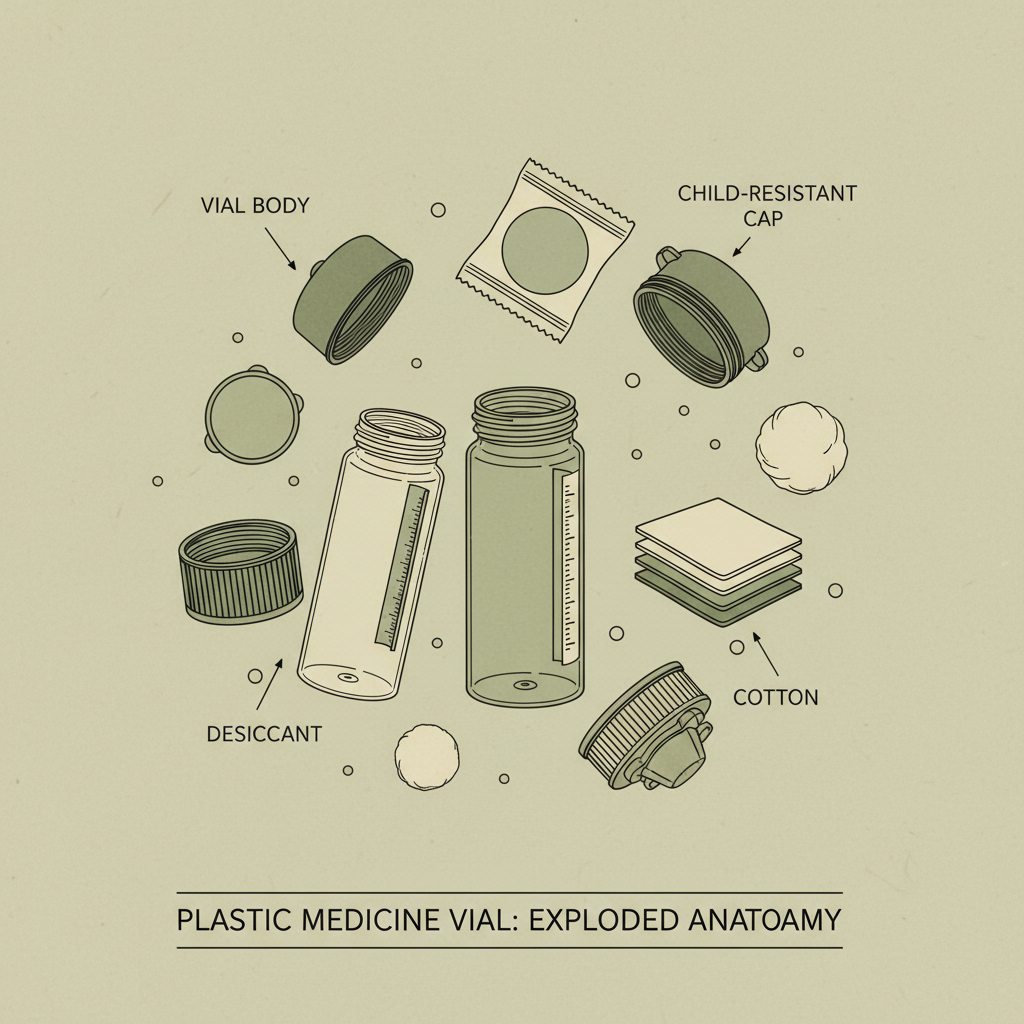
Anyway, I think we’re finally getting a handle on the material science. We primarily use polypropylene (PP) and polyethylene (PE) for the plastic medicine vials. PP is… well, it’s stiff. Smells a little plasticky, naturally. You can feel the difference – it's a bit harder to squeeze. PE is more flexible, feels almost waxy, but less chemically resistant. We also do some with PET, but that's usually for things that need a bit more clarity and barrier properties. The trick is finding the right blend. It’s not just about the material itself, but the additives too – stabilizers, antioxidants, impact modifiers… it’s a whole science.
Recent Trends and Design Pitfalls
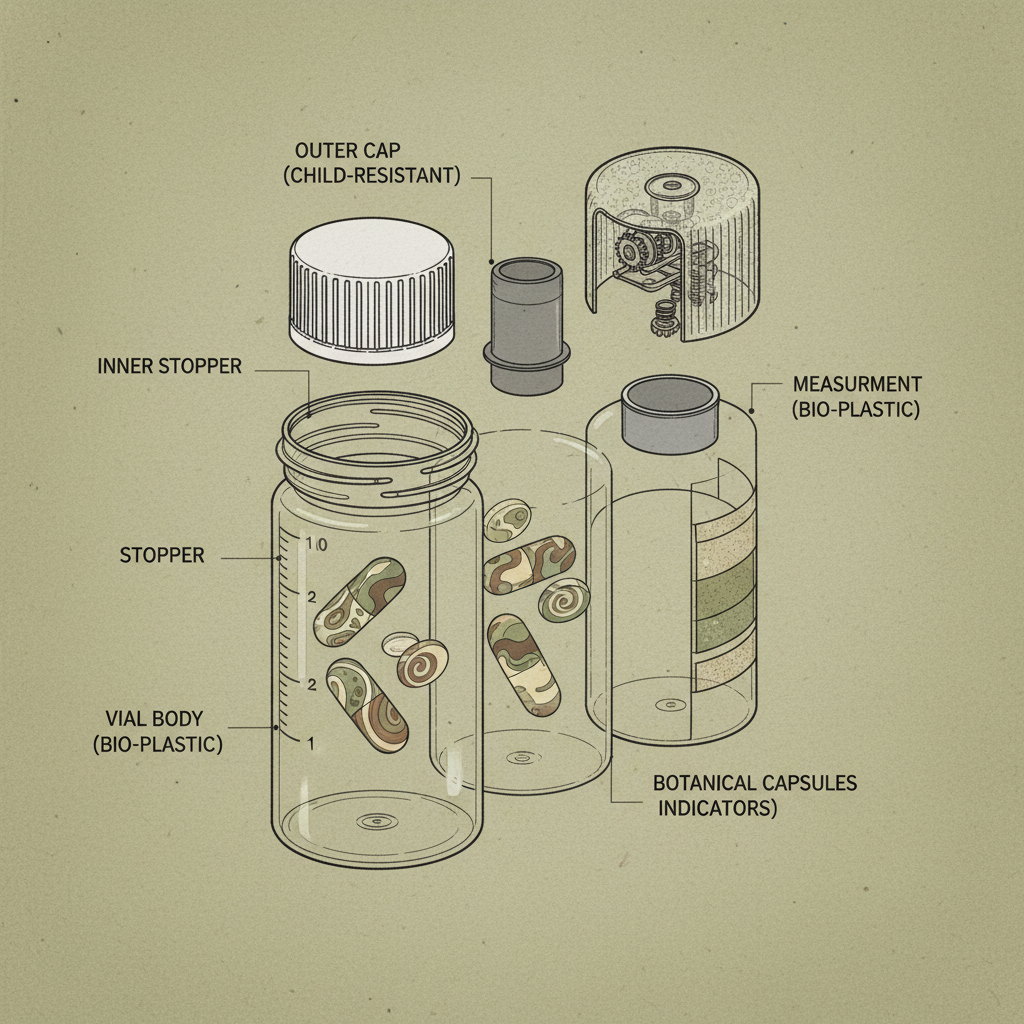
Strangely enough, a big trend now is bio-based plastics. Sounds good on paper, right? But I encountered this at a packaging factory last time, and the stuff was terrible. Brittle, inconsistent, and smelled like… well, like rotting vegetables. Apparently, getting the performance up to par with traditional plastics is a real challenge. It’s getting better, sure, but we're not there yet. People also obsess over thread design. They want tighter seals, more complicated closures… and half the time, the guys on the line can’t even get them to work. Keep it simple, that’s my motto.
And the wall thickness. Oh, the wall thickness! Everyone wants it thinner, thinner, thinner. It's a constant fight. You’re always walking the line between weight savings and structural integrity. You show them the data, run the simulations, but sometimes, you just gotta say, “Look, it feels flimsy.”
Material Specifics: Handling and Feel
Let’s talk materials. I’ve been handling these plastics for years. Polypropylene (PP), as I said, is your workhorse. It's got good chemical resistance, it’s relatively cheap, and it holds its shape pretty well. But it can be a bit brittle, especially in cold weather. You gotta be careful with that. Polyethylene (PE) is softer, more flexible. It's good for things that need to be impact resistant. But it doesn’t like strong chemicals. It’ll swell up and become useless.
Then there's PET. That's the clear stuff. It's good for visibility, for showing off whatever's inside the plastic medicine vial. But it's more expensive, and it's not as chemically resistant as PP or PE. And handling it... you get fingerprints everywhere. I swear, it's a magnet for smudges.
The additives are just as important. You need UV stabilizers to prevent the plastic from breaking down in sunlight. You need antioxidants to prevent it from becoming brittle over time. And you definitely need impact modifiers to make it tougher. It’s a whole alchemy, really.
Real-World Testing – Beyond the Lab
Lab tests are fine, I guess. Burst tests, drop tests, chemical resistance tests… they give you a baseline. But they don’t tell you what happens when a guy drops a full pallet of plastic medicine vials off the back of a truck. Or when it sits in the sun for six months. Or when someone tries to reuse it for something it wasn't intended for.
We do a lot of field testing. We send samples out to construction sites, factories, anywhere we can get real-world feedback. We ask the guys on the ground, "What breaks? What works? What's a pain in the neck?" Their feedback is invaluable.
We also do accelerated aging tests. We expose the plastic medicine vials to extreme temperatures, humidity, and UV radiation to simulate years of use in a matter of weeks. It’s not perfect, but it gives us a good idea of how the material will hold up over time.
User Application: It's Not Always What You Expect
You think you know how people are going to use your plastic medicine vials, right? You design them for a specific purpose, you write the instructions… but then you go out in the field and you see them being used for all sorts of things. Like, I saw a guy using one to hold screws. Another was using it as a makeshift funnel.
It’s frustrating, but also kind of fascinating. It shows you that people are resourceful. They’ll find a way to make things work, even if it’s not what you intended. And that’s valuable information. It tells you what features are important, what designs are intuitive, and what needs to be improved.
plastic medicine vials Performance Ratings
Advantages, Disadvantages, and Customization
The advantages are obvious: lightweight, durable, relatively cheap. But the disadvantages... well, plastic’s plastic. It's not as strong as metal, it’s not as heat resistant as glass, and it's not biodegradable. It's a compromise. You’re always balancing cost and performance.
Customization? We can do a lot. Different colors, different sizes, different shapes. We can add logos, labels, barcodes. Last month, that small boss in Shenzhen who makes smart home devices insisted on changing the interface to , and the result was a three-week delay because it required completely retooling the molding process. He was convinced it was the future. I told him, “Sir, nobody’s going to be plugging a USB-C cable into a tiny medicine vial.” But he wouldn’t listen. Anyway, I think he regretted it.
A Customer Story from Shenzhen
Like I was just saying, that guy in Shenzhen... it was last month. He runs a small electronics factory, always pushing the boundaries. He needed a batch of plastic medicine vials for some new sensor he was developing. He wanted them transparent, with super tight tolerances, and, of course, the port.
We explained the cost implications, the lead time, the potential for manufacturing issues. He brushed it all aside. He said, "Innovation requires risk!" Fine. We made the vials. They looked great. But they were a nightmare to assemble. The port was too fragile, the tolerances were too tight. He ended up scrapping half the batch.
He finally called me up, sounding defeated. “Maybe,” he said, “sometimes simple is better.” I just chuckled. I’ve seen it a thousand times.
Core Performance Metrics
We track a lot of different metrics, but ultimately, a few key things matter most. How much weight can it hold before it deforms? How much impact can it withstand before it cracks? How long can it sit in direct sunlight before it starts to degrade?
And then there’s the cost, of course. You can make a plastic medicine vial that can survive a nuclear blast, but nobody’s going to pay for it. It’s all about finding the sweet spot. Balancing performance, cost, and manufacturability.
Below is a quick breakdown of typical values we aim for, based on common applications. It’s not an exact science, but it gives you a general idea.
Key Plastic Medicine Vial Performance Indicators
| Material Type |
Impact Resistance (Joules) |
Tensile Strength (MPa) |
UV Degradation (6 months) |
| Polypropylene (PP) |
8-12 |
20-30 |
10-15% reduction in strength |
| Polyethylene (PE) |
15-20 |
8-12 |
15-20% reduction in strength |
| Polyethylene Terephthalate (PET) |
5-8 |
55-70 |
5-10% reduction in strength |
| PP + 10% Glass Fiber |
18-25 |
40-50 |
8-12% reduction in strength |
| HDPE (High-Density PE) |
20-25 |
15-20 |
10-15% reduction in strength |
| PP with UV Stabilizer |
8-12 |
20-30 |
5-8% reduction in strength |
FAQS
Typically, you'll see cracking around stress concentration points – where the design has sharp corners or thin walls. Impact resistance is often the first to go, leading to shattering, but prolonged chemical exposure can also cause crazing or swelling, weakening the plastic over time. We’ve also seen issues with lid deformation if the sealing pressure is too high, especially with thinner materials.
Consistency relies heavily on strict quality control throughout the entire process. We start with raw material testing, then monitor mold temperature and injection pressure during production. Random samples are pulled for dimensional checks, weight measurements, and burst testing. We also implement statistical process control (SPC) to identify and address any deviations from our established standards. It’s a lot of vigilance.
Lead times vary considerably depending on the complexity of the design and the quantity required. For standard sizes and materials, we can often deliver within 4-6 weeks. Custom tooling, however, can add another 6-8 weeks to the process. Right now, supply chain issues can also throw a wrench in things, so it’s always best to plan ahead. Like, way ahead.
We adhere to ISO 9001 standards for quality management. Depending on the application, our plastic medicine vials can also be certified to meet specific regulatory requirements, such as USP Class VI for biocompatibility if it's going into medical applications. We'll work with you to determine the necessary certifications for your specific needs.
Many of our materials, like PP and PE, are recyclable, but the infrastructure for collecting and processing them varies greatly by region. We're actively exploring the use of post-consumer recycled (PCR) plastics in our products, and we're also investigating biodegradable alternatives. It's a work in progress, to be honest, but sustainability is a growing priority for us.
The MOQ depends on the size and complexity of the vial. For standard designs, it’s typically around 10,000 units. For custom designs with new tooling, the MOQ is higher – usually around 50,000 units – to offset the tooling costs. We can sometimes be flexible for smaller runs, but it will likely involve a tooling charge.
Conclusion
Ultimately, we’ve talked about materials, testing, design pitfalls, and even a guy in Shenzhen and his obsession. It all comes down to this: plastic medicine vials aren’t glamorous, but they're essential. They keep things safe, secure, and contained. They’re the unsung heroes of a lot of industries.
And at the end of the day, whether this thing works or not, the worker will know the moment he tightens the screw. That’s the truth of it. If it feels right, if it holds up, if it does the job… that’s all that matters. If you need quality plastic medicine vials, you know where to find us.