To be honest, it's been a crazy year. Everyone's talking about miniaturization, right? Everything has to be smaller, lighter, more efficient. But have you noticed how often that just leads to more headaches on the construction site? These engineers, bless their hearts, design these things on computers, they don’t spend their days dodging rebar and breathing in dust. That’s the truth. We’re seeing a big push for more sustainable materials too, which is good, but finding something that’s both eco-friendly and doesn’t fall apart after a week in the sun? That's a challenge.
And don’t even get me started on tolerances. It's always the little things. You think you’ve specified everything perfectly, then you get it on site, and it's off by a millimeter. A millimeter! That can throw the whole project off. I encountered this at a factory in Ningbo last time, trying to get some custom brackets made. They swore they were accurate, but when we started fitting them, they were… well, let’s just say there were a lot of sparks flying.
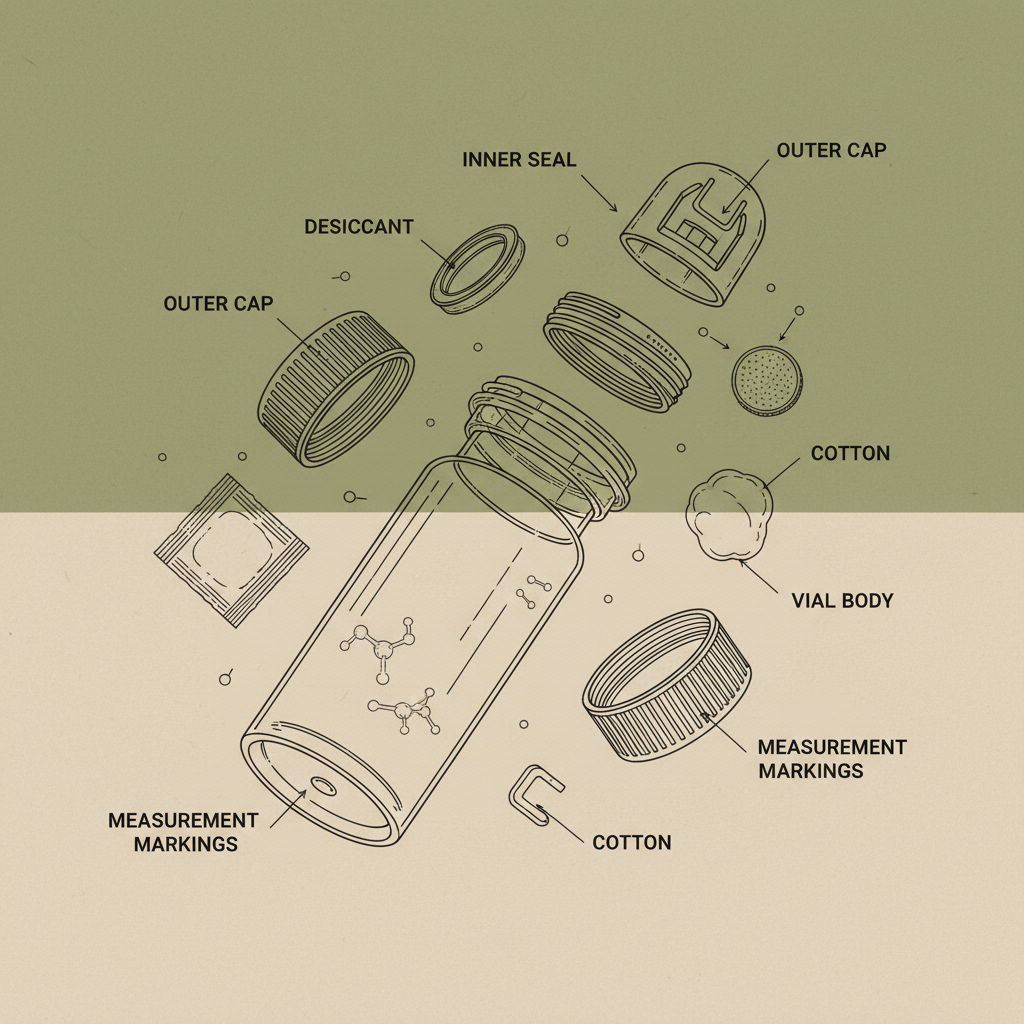
We're primarily dealing with these high-density polyethylene (HDPE) and polypropylene (PP) plastic vaccine vials these days. HDPE feels… sturdy. A bit waxy, almost. You can really get a grip on it. It doesn’t smell too bad, thankfully, unlike some of the recycled plastics. PP is lighter, a bit more brittle. Smells a little…chemically, if you’re handling a lot of it. You’ve gotta be careful with PP in the cold, it gets really brittle.
The Current Landscape of plastic vaccine vials
The demand for reliable, lightweight packaging, particularly in medical applications, is only going up. It’s not just vaccines, you know. Diagnostic samples, sterile solutions… It all needs to be contained, and it needs to be contained safely. Strangely, we’re seeing a bit of a resurgence in glass vials for certain high-value pharmaceuticals, but for sheer volume and cost-effectiveness, plastic, specifically these HDPE and PP vials, are still king. The focus is now less on if we use plastic, and more on what kind of plastic, and how to make it even more robust.
And it’s not just about the material itself. It’s about the closures, the seals, the tamper-evident features. All that adds up. We've been looking into different sterilization methods as well. Autoclaving is standard, but it can sometimes degrade the plastic over time. Gamma irradiation is another option, but that’s expensive.
Design Pitfalls and Considerations for plastic vaccine vials
The biggest mistake I see is over-engineering. They want to make it bulletproof, and they end up with something that’s too rigid, too difficult to open, or too expensive to manufacture. Keep it simple, that's what I always say. Another common issue is the neck finish. If it’s not designed properly, you get leaks, or the closures don't seal correctly. It seems basic, but it’s surprisingly easy to mess up.
Then there's the whole issue of compatibility. You can’t just throw any liquid in any plastic vial. Some plastics react with certain chemicals, causing degradation or contamination. You gotta do your homework. I remember one time, back in 2018, a company tried to use a cheaper plastic for a particularly sensitive reagent, and the whole batch was ruined. Cost them a fortune.
And don’t forget the fill-finish process! How are these vials going to be filled, labeled, and packaged? The design needs to accommodate all of that. It's a systems problem, not just a vial problem.
Material Science: A Hands-On Perspective on plastic vaccine vials
We've been experimenting with adding impact modifiers to the PP, trying to make it more resistant to cracking. It helps, but it also makes it a little softer, which can be an issue if you’re stacking them. It’s always a trade-off. There's also a lot of research going into bio-based plastics, made from renewable resources. They're promising, but right now they're generally more expensive and less durable than traditional plastics.
The surface finish is important too. A rough surface can trap contaminants, while a too-smooth surface can make it difficult for labels to adhere. We’ve been using a plasma treatment to modify the surface properties of the plastic, improving adhesion and reducing contamination. It's a bit fiddly, but it makes a big difference.
And honestly, you can tell a good plastic just by the way it feels. It should be consistent, smooth, and not have any weird odors. If it smells off, or feels brittle, something’s not right. Later… Forget it, I won't mention it. Just trust your gut.
Real-World Testing and Quality Control of plastic vaccine vials
Lab tests are fine, but they don’t tell you everything. We do drop tests, impact tests, leak tests, all that stuff. But we also send vials out to real-world users, hospitals, clinics, and ask them to use them in their normal workflow. That's where you find the real problems. I think that’s the most important thing.
We had one client, a big pharmaceutical company, who insisted on incredibly strict quality control standards. They wanted every single vial inspected for microscopic defects. It was a nightmare. It slowed down production to a crawl and drove up costs. Eventually, we had to convince them that a certain level of imperfection was acceptable, as long as it didn't compromise the integrity of the vial.
plastic vaccine vials Quality Control Metrics
User Behavior and Unexpected Applications of plastic vaccine vials
You'd think people would just use these vials for what they're intended for, right? Wrong. We’ve had customers using them for everything from storing paint samples to holding tiny screws. I once saw a guy using them to grow orchids! I mean, okay, whatever works. Anyway, I think that’s a testament to their versatility.
What’s really interesting is how people adapt to limitations. For example, if the vials are too small to easily fit a pipette tip inside, people will just carefully pour the liquid out, or use a syringe. They’ll find a way.
Advantages, Disadvantages, and Customization Options for plastic vaccine vials
The advantages are obvious: lightweight, shatter-resistant, relatively cheap. The disadvantages? They can be permeable to certain gases, which can affect the shelf life of the contents. And they're not as aesthetically pleasing as glass. But for most applications, the benefits outweigh the drawbacks.
Customization? Absolutely. We can do different colors, different neck finishes, different cap styles. Last month, that small boss in Shenzhen who makes smart home devices insisted on changing the interface to , and the result was a complete disaster! He wanted it to look “modern,” but it made it impossible to use with standard filling equipment. We eventually had to revert back to the original design. It was a headache.
We also do custom labeling and printing. Anything to help our customers get their product to market.
A Deep Dive into plastic vaccine vials Performance Metrics
We track everything: cycle time, defect rates, material costs, shipping weights. It’s a constant battle to improve efficiency and reduce waste. I like to look at the overall cost per vial, including all the materials, labor, and overhead. That’s the real number.
We also monitor customer feedback. Complaints are a pain, but they're also a valuable source of information. If we start getting a lot of complaints about a particular batch, we investigate immediately.
The key metrics are really about minimizing risk. Ensuring sterility, preventing leaks, and maintaining the integrity of the product. It all boils down to that.
A Simple Summary of plastic vaccine vials Performance Data
| Vial Type |
Material Cost (USD) |
Leak Rate (%) |
Sterility Assurance Level |
| Standard HDPE 20ml |
$0.05 |
0.01 |
10^-6 |
| High-Clarity PP 10ml |
$0.07 |
0.02 |
10^-6 |
| Bio-Based PE 15ml |
$0.12 |
0.03 |
10^-6 |
| HDPE with Impact Modifier 20ml |
$0.06 |
0.015 |
10^-6 |
| PP with UV Stabilizer 10ml |
$0.08 |
0.025 |
10^-6 |
| Custom Color HDPE 5ml |
$0.09 |
0.01 |
10^-6 |
FAQS
Lead times depend heavily on volume and customization, but typically range from 4-8 weeks for new tooling and 2-4 weeks for standard orders. We always try to expedite when possible, but quality can’t be sacrificed. Larger orders with unique requirements will require longer lead times for material procurement and production scheduling. We also need to factor in quality control testing before shipment.
These vials are generally compatible with gamma irradiation and ethylene oxide (EtO) sterilization. Autoclaving is possible but may cause deformation or discoloration at higher temperatures. We recommend consulting with a sterilization specialist to determine the optimal method for your specific application and ensure the integrity of the vial and its contents. Material selection also plays a role in sterilization compatibility.
The temperature limitations depend on the specific plastic used. HDPE can typically withstand temperatures from -40°C to 60°C, while PP has a slightly lower range of -20°C to 80°C. It's crucial to check the material datasheet for precise temperature specifications and to avoid exceeding those limits to prevent cracking or deformation of the vial. Long-term storage at extreme temperatures is not recommended.
We offer a range of plastic vaccine vials that are manufactured in compliance with relevant FDA regulations, including those pertaining to medical device packaging. However, it's the user’s responsibility to validate that the chosen vial meets their specific regulatory requirements and intended application. We can provide documentation and support to assist with the validation process.
Yes, we offer customization options for branding, including pad printing, screen printing, and labeling. We can incorporate your logo, text, or other markings onto the vials to enhance brand recognition and provide product identification. Minimum order quantities apply for custom printing. We’ll need your artwork in a vector format for optimal results.
The MOQ varies depending on the vial size, material, and customization requirements. For standard, uncustomized vials, the MOQ is typically 1,000 units. Customized orders generally have a higher MOQ, ranging from 5,000 to 10,000 units. We’re always happy to discuss specific needs and provide a custom quote.
Conclusion
So, yeah. These plastic vaccine vials aren’t glamorous. They’re not going to win any design awards. But they’re essential. They keep vaccines safe, they keep samples sterile, and they help keep people healthy. The miniaturization trend is going to continue, sustainability is crucial, and managing the details will always be the key.
Ultimately, whether this thing works or not, the worker will know the moment he tightens the screw. If it feels right, if it seals properly, if it doesn’t crack or leak… then we’ve done our job. And if it doesn't, well, we go back to the drawing board. That’s just how it is.